Nabil Group plans energy security through solar power and biogas
By : admin | Posted at 8:59 AM - 16 October, 2026
Nabil Group of Industries has drawn up plans to generate electricity from solar power and biogas to meet the electricity demand of its own industrial facilities and expand the use of renewable energy.
Under the group's plan, an initial investment of Tk 12 billion is envisaged to develop 200 megawatts (MW) of solar power capacity. The group is also planning to produce electricity and organic fertiliser from waste generated by an integrated poultry project, says a press statement.
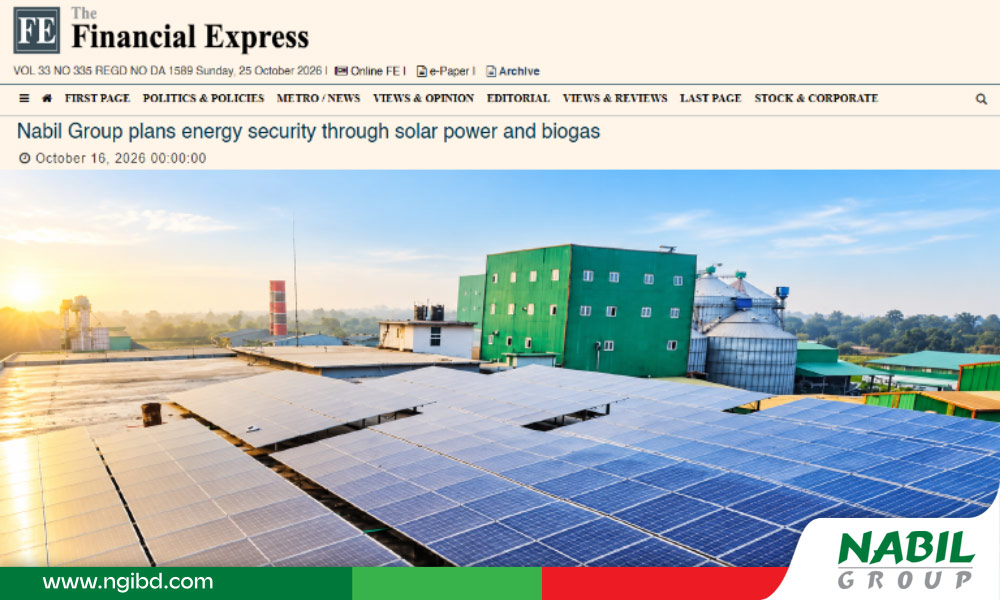
As an initial step in its solar power plan, solar panels have been installed on the roof of Nabil Cold Storage on a pilot basis. Drawing on the experience gained from this installation, the company aims to implement solar power generation and use on a larger scale in the future.
The main objective of the planned 200 MW solar power project is to increase the use of renewable energy to meet the electricity needs of the group's own industrial facilities.
The group also plans to supply electricity to the national grid after meeting the power requirements of its own factories.
Plan to generate electricity from poultry waste
Alongside solar power, Nabil Group has a plan to generate electricity using biogas at its integrated poultry project. A 1 MW combined heat and power (CHP) system is under process for producing biogas from poultry waste and using the gas to generate electricity.
According to the project plan, waste generated by a poultry operation with a capacity of 1.25 million commercial layer birds and 255,000 pullets-a total of 1.505 million birds-will be used as feedstock for the system. Biogas will be produced from the waste through anaerobic digestion. Net electricity generation is expected to average 625 units (kWh) per hour. The project also plans to produce organic fertiliser from the digestate remaining after electricity generation.
Project engineer Dr G. N. M. Ilias said, “Systematically processing poultry waste to produce biogas, and then generating electricity and organic fertiliser from it, offers a promising approach to environmentally friendly waste management. If implemented, such an initiative could ensure the proper use of waste, reduce dependence on conventional fuels and increase the reuse of biological resources. However, to ensure environmental benefits, appropriate technical and environmental standards must be followed in waste processing, biogas management, emissions control and the safe use of the organic fertiliser."
Nabil Group Managing Director and Chief Executive Officer, agriculturist Aminul Islam, said, “Ensuring energy security is as important as increasing production capacity for the sustainable growth of industry. We are exploring ways to expand the use of renewable energy to meet the electricity needs of our own industrial facilities. Alongside solar power, the plan to produce biogas from poultry waste and use it to generate electricity and organic fertiliser could advance our goal of making the best use of resources and building an environmentally friendly industrial system.”
Latest Post
-
Khulna – Regional Partner’s ..
October 18, 2026
-
Nabil Group plans energy ..
October 16, 2026
-

Nabil Group: From trading ..
September 30, 2026
-

Rangpur – Regional Partner’s ..
September 20, 2026
